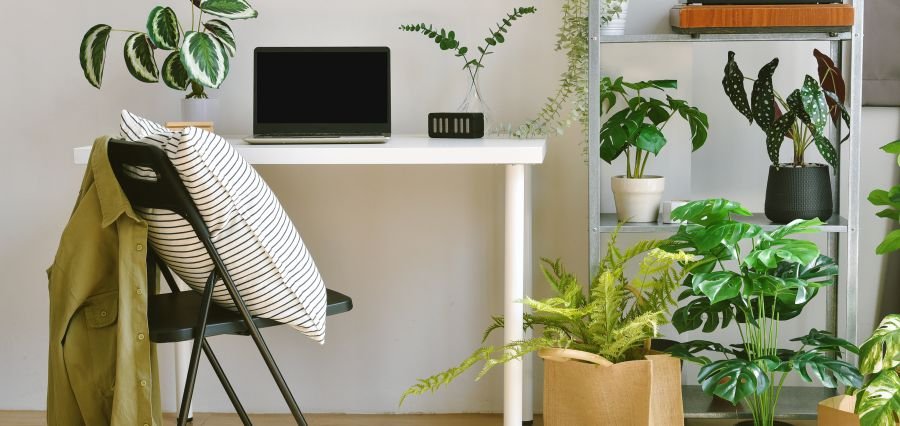
Artificial plants for home decor maintain a lively and lifelike appearance throughout the year.
Caring for plants might be difficult amidst the daily grind of work and responsibilities, but that doesn’t mean you have to give up on the beauty of nature in your home. This is where fake plants come in. These feel-good, low-maintenance alternatives are the ideal way to bring nature into your home and improve its curb appeal without having to put in any effort to maintain it. Here are the greatest artificial plants to enhance your area.
Flowers’ beauty is unmistakable, and they readily capture attention. With long green stems, broad leaves at the base, and vivid red imitation tulip blossoms on top, this plant transforms any nook. It makes a great artificial hanging plant for the home’s entrance passage.
Bonsai plants are popular for home decor, and the artificial Ponytail Bonsai plant is particularly eye-catching. The elegant sprouting of leaves from the base, spreading 360 degrees, exudes a poetic appeal. When artificial trees are this beautiful, they deserve to be placed in a simple yet attractive planter.
The Safari Bonsai, with its dark green leaves trimmed with a snowy touch and a stem filled with foliage from top to bottom, is a must-have indoor artificial plant. The green planter enhances the elegance of the imitation plant and makes it ideal for home decor.
Because of advancements in design and polish, it is often impossible to tell the difference between an artificial plant and the real thing today. As a result, there is no compromise in terms of beauty and feel, which opens up many more alternatives for greenery and plants.
Real plants naturally have a higher cost. Some may be less expensive to purchase initially, but they will require continuous maintenance, which always comes at a cost. Real plants die and need to be replaced, and they may require larger pots as they develop. Furthermore, a real plant may come as a seedling that will take years to attain its full height and make the desired impact.
Artificial plants arrive fully developed, with only the initial expense to cover. In addition to the continual care that real plants require (pruning, watering, fertilizer, etc.), the plant may need to be relocated to guarantee appropriate sunlight, water, or drainage. Temperature fluctuations can be problematic, and you may need to call in a specialist on a regular basis to care for your plants.
Artificial plants are very different; if you have a low-quality product, you may need to move them every now and then to keep them from fading, but other than that, you should only wipe the leaves down every now and then if they begin to gather dust.
If you don’t have the correct atmosphere or space for the plants you want, you may have limited alternatives when it comes to real greenery. Tropical blossoms, for example, may require sunlight or a humid atmosphere, which you cannot offer. This is not the case with fake plants; you can design any look you desire without restriction. Furthermore, the variety of artificial plants available nowadays is so diverse that you will have an abundance of selections.
Real plants frequently provide filtration for the air we breathe, whereas fake plants cannot. However, study has showed that artificial plants are effective at improving mood and morale, as well as productivity and focus. Real plants can cause several problems for humans who share the same space. When children or pets touch or consume them, they can cause allergies and even poisoning. Artificial plants do not have any of these issues, and there is no need to be concerned about pollen, which causes allergies for almost 12 million people in the United Kingdom alone.
Read More: https://homendecorindia.com/